Ally Watkins
[00:00:00] Introduction
[00:00:00] Lee Schneider: This is The Future Lab. I'm Lee Schneider. I'm excited to ask researcher Ali Watkins what she knows about the large trends in YA and middle school books today. But first, can I tell you about one of my favorite book websites that also has a podcast? Book Notification is a free site that tracks your favorite authors and alerts you when they have new books.
Every Sunday, the Book Notification podcast picks 10 new releases worth reading. Here are the details.
[00:00:36] Book Notification
[00:00:36] Vince from Book Notification: Looking for something new to read? I'm Vince, and every Sunday on the Book Notification podcast, I cover the week's new book releases. With anywhere from 400 to 1,000 new books released each week and more than 100,000 authors listed on Book Notification, it can be hard to sort through them all.
That's why our team selects 10 favorites each week with a little something for everybody. Of course, you can always visit our website, booknotification.com, to explore the full list of the week's new books and follow your favorite authors so you'll be the first to know when their next book is available.
Stay up to date on the latest in lit and join me each week for the Book Notification podcast
[00:01:22] Guest Introduction
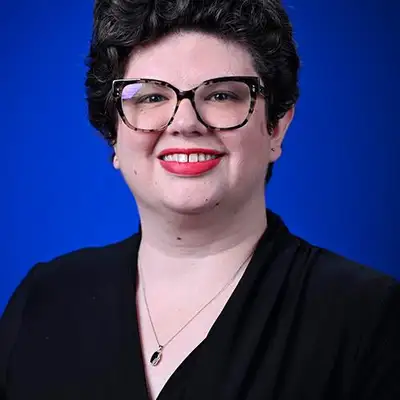
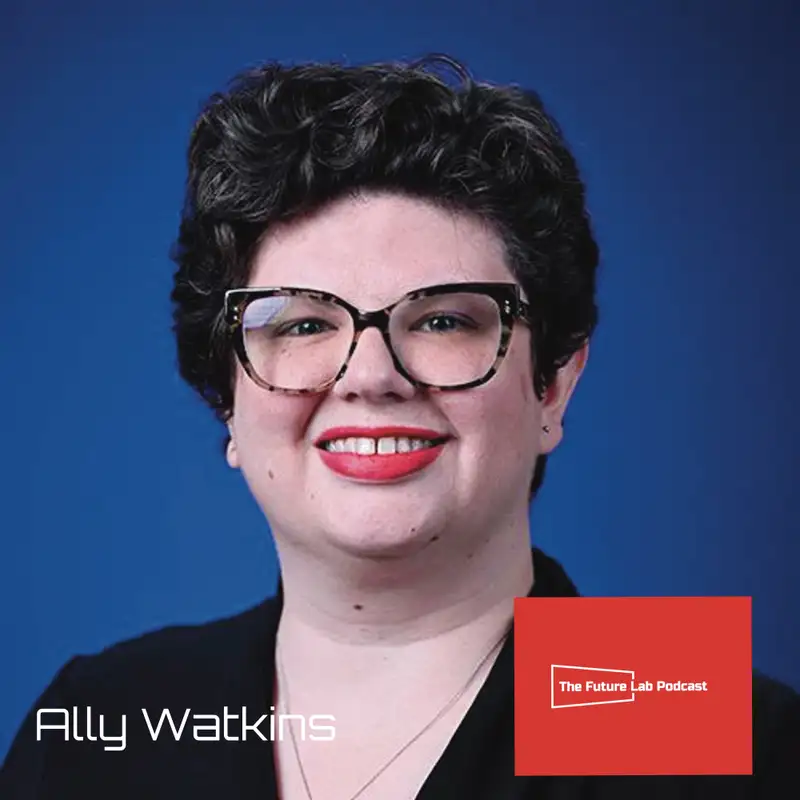
[00:01:22] Lee Schneider: Now here's today's guest. Ally Watkins is a university librarian who spent years working with kids and teens in public libraries. I'll ask her about who YA is really being written for now, and where middle schoolers get left out.
We'll get into why graphic novels never stay on the shelf, and we'll cover how to raise a reader for life. Here's my interview with Ally. Ally, welcome to the show. It's so great to have you here.
[00:01:51] Ally Watkins: Thank you for having me.
[00:01:53] Allie's Research on YA Protagonist Ages
[00:01:53] Lee Schneider: So let's start with your research. Could you break that down a little bit for us?
And, uh, we'll probably dig in with some follow-up questions.
[00:02:04] Ally Watkins: Sure. So I'm an academic librarian at a university now, but for many years I was in public library youth services, and what all of my colleagues and friends in public libraries and school libraries were telling me is that they were seeing the ages of the protagonists in young adult books getting older and older, and they were having trouble finding books for middle schoolers and for younger high schoolers.
So, um, I really dug into the research and the literature, started trying to find something that backed this up, um, and I hadn't found any work done on it, so I decided to design my own study, and I looked at what I call popular way. So I looked at New York Times bestsellers over a 10-year period, and I looked at the ages of the protagonists in each of the books that appeared on that list.
Um, and what I found was pretty staggering. 90% of all of the protagonists in the study were above the age of 15, and that was between December 2023 and December 2013 and December 2023. It was higher than I thought it was even gonna be.
[00:03:16] Why Are YA Protagonists Getting Older?
[00:03:16] Lee Schneider: The obvious question is, first, why? Why do you think that was happening?
[00:03:21] Ally Watkins: So I think there are a lot of reasons, and I dig into this more in my paper, but there are more adults reading YA, and so as that trend continues, there are more people now that grew up with YA as a category, and they're continuing to read YA. I think that's wonderful. I think anyone should be able to read whatever they want.
I enjoy YA. But I do have some concerns if adults are influencing the market, um, that is supposed to be for children and young adults. I think it's-- there are also marketing departments at all these publishing houses. There are some things that are easier to sell at some times than others. So I, I think there are a lot of reasons that that could be happening.
[00:04:05] Kids as Discerning Readers
[00:04:05] Lee Schneider: What have you heard from readers, young readers and parents and colleagues about- The appropriateness of the age in the YA book. What I'm getting at there is would a young reader really be that fine-tuned to be able to guess at the age of the protagonist and say, "Nope, nope, this book is not for me"?
[00:04:33] Ally Watkins: I think it depends on the kid always.
Mm-hmm. Um, I think kids are-- I think we don't give kids and young readers enough credit. I think if a kid doesn't wanna read something, they're more likely to put it down than, than an adult with some sense of, "I have to finish this." But I do think that even if a kid might want to read up, another kid might not want to read up.
They might... You know, a 12-year-old might be perfectly willing to read a book about a 17-year-old, but another 12-year-old is really looking to find something ju- uh, written, uh, about someone that looks like them and is their age.
[00:05:10] Lee Schneider: I would agree with you in the sense of Kids are discerning readers, maybe even more discerning than adults.
It's taken me decades to get to the point where I would be reading a book, I'm not 100 pages in, and I say, "Nope, I don't have to finish this. You know, this isn't an assignment. No one's making me read this, so I'm not gonna finish it." It's happened a few times. But I think k- I think kids are, uh, very discerning readers and really won't give a book the time of day if it doesn't grip them right away, if they don't see themselves in it, and if the relationships in it don't apply to their relationships, even in a fantasy book.
You know, even in a book where we're talking about swords and sorcery, it still has to be about their relationships, I think. Do I have that right, or how would you modify that?
[00:06:00] Ally Watkins: I agree with you. I think kids are very discerning readers, uh, certainly more than we give them credit for. Kids are incredibly smart and c- take in way more than we see, especially kids and teens.
They can smell artifice, and we should definitely give them more credit. I do think that kids don't mind reading about things that-- about subjects that necessarily aren't about them. I think kids read very widely, but they do want things that relate to, um, their lives and their relationships and things that they can see themselves in and things that they can see their friends in and their families in and people that are and aren't like them.
So yeah, I definitely agree with you that kids are very discerning, and the books that are being published now are wonderful, and I hope that we can encourage more kids to find more of them.
[00:06:52] Are Kids Reading Less?
[00:06:52] Lee Schneider: And to talk about the books being published now, honestly, it's kind of confusing to me because on the one hand I hear it's a publishing boom and there's more different kinds of YA than ever before, and on the other hand, I hear people, kids, adults, are not reading as much, that people are putting down books, and there's much competition from social media, devices, you name it, streaming Do you find that that is happening, that there is a lot of competition among adults and kids for books, and are they reading less, and what could be done about that?
[00:07:32] Ally Watkins: Some studies are showing that kids are reading less. Um, I think that we have to be sure to see exactly what we're studying. Some researchers have pointed out that the studies that are measuring the, especially kids that are reading less, aren't measuring everything that kids are reading, right? So we have Wattpad, we have Webtoon, we have, uh, AO3.
Um, kids are super into fan fiction. Kids are super into Webtoons. They love these things. Just because these aren't books that have ISBNs doesn't necessarily mean that they're not valid reading, and we have to, like, step back from our snobbery as adults and book lovers about this to, um, kind of say, "All of these things are valuable.
All of these things are gateways." We want kids reading, even if it's on their phone, even if it's, um, not what we see as picking up a print book and reading. Um, that being said, I think there's a lot of reasons why kids' and teens' reading habits have collapsed, and certainly, some of it is related to technology, but I think it's more complex than that.
I have two nieces and a nephew that are young. They are very overscheduled. Um, there are-- And that's not the fault of their families or their parents. It's, you know, there are more activities than ever before. There are more academic pressures than ever before. Kids just have a lot of things in their lives, and their families are trying to fit in family time as well.
Teachers are contending with less instruction time, so there's less times in younger grades for read-alouds, which is something that really encourages reading at a young age. So I think the issue is really complex.
[00:09:16] The Reading Drop-Off Age
[00:09:16] Lee Schneider: If there is a drop-off, is there a specific age-related cliff for that drop-off? Some have argued kids have trouble transitioning out of picture books, or kids, like you're saying, their schedules explode as they get into middle school and high school.
Can we point to a particular life event or age- Mm-hmm ... or is it happening in different ways than that?
[00:09:41] Ally Watkins: I think it's happening in different ways, and I think it's happening at different places, um, for different kids that are, you know, for different places in, in the country or in the world. I see it happening-- When I was in public libraries, I would see it happening a lot, um, around the intermediate school, junior high age, just because that's when kids start getting really busy.
They get involved in band and orchestra and things that have after-school practices. We weren't seeing them in the public library as much those days, which is sad because it doesn't necessarily mean that they don't want to read. It just means that there are other things that have demands on their time.
[00:10:20] Does It All Count as Reading?
[00:10:20] Lee Schneider: Let's talk about this other, other media too, where there are audiobooks, there's Wattpad, there's digitally distributed books. There are short-form serialized stories that aren't necessarily like the novel that we might pick up in a paperback. Does all of that count as reading? I've, I've heard the word like it's a gateway, the phrase, you know, it's a gateway.
It gets them in, but does it really count for developmentally, let's say?
[00:10:52] Ally Watkins: I think words are words. I think that it counts. Audiobooks, certainly. At the-- I know there's a lot of online debate about whether or not audiobooks count. Audiobooks are books. As a librarian, I give you permission to count your audiobooks in your book goals.
I love audiobooks. But I think anything that gets the kids reading is, is reading, and I think that that is completely valid. Yeah.
[00:11:18] Lee Schneider: W- we mentioned screen time a bit, but it, it sounds like you're not too worried, if that's the word, about screen time, that, you know, screen time is part of our lives now. So s- if these books are available that way, fine.
[00:11:34] Ally Watkins: I think that kids are gonna be on screens. What I feel about it, I think at, at this point in 2026 is pretty irrelevant. They're going to be on the screens. So if they're reading on Wattpad for an hour a day instead of watching YouTube, I think that that's great. I think that there are great things on YouTube as well, but I think that if we can utilize what they're already going to do to get them to be reading, I think that that's working with them and not against them.
[00:12:04] The Value of Long-Form Storytelling
[00:12:04] Lee Schneider: And what about whether it's on a screen or in a book, the argument that long-form storytelling, i.e. novels, you know, holding ideas in your mind for 297 pages is good. It's a developmental thing that happens when we read long-form stories that some researchers have said we become more empathetic. We understand the world in a deeper way.
Maybe we're a little bit kinder. Uh, that's extrapolating quite a bit, but Do you feel that there is really something to be said in defense of long form storytelling as a valuable cultural artifact, whether it's whatever the medium?
[00:12:50] Ally Watkins: Yeah, I do agree with that. As a librarian and as a lifelong lover of books and reader, I take in a lot of long form storytelling myself, and in my family I'm known as the book aunt.
I give, I give books, whether they be audiobook credits or print books, to all of my nieces and nephews and my little cousins. Um, I do think that's valuable. I think that reading does create empathy. I think I always go back to reading Sims Bishop's Mirrors, Windows, and Sliding Glass Doors metaphor. I think reading a narrative tale about someone that looks like you or someone that doesn't look like you is valuable either way.
Um, and I think that having books in the world and encouraging our kids to read them is something that we should definitely continue to do.
[00:13:40] Lee Schneider: Hmm.
[00:13:40] Encouraging Reading Choice
[00:13:40] Lee Schneider: What happens when they're not encouraged, though? You have teachers who are maybe teaching books that are very old in the view of the kid, or their method of teaching it is sort of makes it a chore.
What can we do about that?
[00:13:54] Ally Watkins: So I think for me as a former public librarian, the most important thing to emphasize is choice. Kids are always going to be assigned things they don't like. I was assigned things I didn't like. I was assigned things that weren't my cup of tea. I was assigned things that were old.
But I think we need to remember that kids are going to be excited about things that they get to choose. So sure, they might be assigned something they don't like, but we can have them have conversations with a school librarian or a public librarian or a classroom teacher about something they do like.
Librarians are trained in reader's advisory, and having relationships with these other adults that aren't parents, that they maybe don't want to talk to their parents about what they're interested in reading, um, are really valuable. So yeah, I think if your child is not excited about what they're reading in school, then it's time to take them to an expert.
[00:14:52] Building Lifelong Readers
[00:14:52] Lee Schneider: And what about building a lifelong habit of reading, making people, helping people, encouraging people to be lifelong readers? Is there any secret sauce there? Is there anything that we should be doing to help that along, and why is that good?
[00:15:08] Ally Watkins: I grew up in a house where my parents read in front of me all the time.
They were both readers. My mom loved books in print. My dad loved books on tape back when they were on cassette tapes, which I know our kids wouldn't even recognize at this point. And both me and my sibling have turned out to be lifelong readers. I think modeling that behavior, um, either as a parent or an aunt or a teacher or a librarian, is extremely important.
I think if kids see that the adults in their lives think that reading is valuable, they will associate it with something being valuable.
[00:15:45] Book Recommendations & Awards
[00:15:45] Lee Schneider: And can we bring up a few of your recommendations? What books are you seeing now that you would recommend?
[00:15:51] Ally Watkins: So I always like to say, and I always like to plug that the American Library Association has a slate of book awards.
They're called the Youth Media Awards. They're absolutely wonderful. There are teachers and librarians that have dedicated their lives to curating these lists and awards that come out every year for kids and teens, and I think we shouldn't reinvent the wheel. Like these, these are books that are highly excellent.
We're familiar with things like the Newbery and the Caldecott, right? We've heard about those our whole lives. But there is an award for excellence in young adult literature called The Printz that has been awarded since 2000. So it's 26 years old, and several of the Printz winners have been absolutely beautiful.
Jellicoe Road by Melina Marchetta, American Born Chinese by Gene Luen Yang, The Poet X by Elizabeth Acevedo, We Are Okay by Nina LaCour. All of these are Printz winners in the last few years. They're gorgeous. They're highly relatable, but also literary. There's also an Excellence in Nonfiction award.
There's the Morris Award for debut writers. We have the Sydney Taylor Medal, the Coretta Scott King Awards, the Pura Belpré Awards, the Stonewall Awards. So I really think that if you're looking for excellent books for kids and teens, then look to the experts
[00:17:18] Graphic Novels
[00:17:18] Lee Schneider: That's great advice. And what can you tell us about graphic novels?
[00:17:23] Ally Watkins: So I love graphic novels. I'm a graphic novels reader myself, and in the last couple years I was on a graphic novels committee for the American Library Association. Graphic novels for kids are great for multimodal literacy and visual literacy. They're not as intimidating for kids. There are less words per page, so reluctant readers love them.
There's been some research done that's shown that they're great for dyslexic readers. When I was a public librarian, I could not keep half my collection on the shelf at any time. So I think this is a great option for kids, and just like any other book, yes, it counts.
[00:17:58] Adult Reading Trends
[00:17:58] Lee Schneider: We've been talking about young readers, but what are the trends with adults, and how might we encourage more adult reading?
[00:18:07] Ally Watkins: So I think that adult reading-- and people have different hobbies, you know. There's always gonna be some people that aren't fans of reading, and as a librarian, I've had to come to the conclusion that that's okay. But I think that adult reading has really taken off, especially during the pandemic. Many more people came to reading, and we see things like BookTok, Bookstagram.
We write them off as being for kids, but it's adults that are driving BookTok and Bookstagram. And I think that these social ways to discuss reading are really, really- Hmm ... um, opening up the world of a lot of adult readers. It's driving sales. Um, we've seen even backlist titles get new life on the internet.
I think that tracking your reading socially has become really fun. Goodreads has always been popular. StoryGraph has been popular, or other reading trackers and reading challenges. I think the gamifying works for adults just like it does for kids. So we're seeing some renewed interest from adults, and I think that's really exciting.
[00:19:10] Closing
[00:19:10] Lee Schneider: That's wonderful. You know, th- this has been really an inspiring conversation, the way you're approaching this from the online world and IRL at the same time. I thank you so much for coming on the show. It's been a pleasure.
[00:19:24] Ally Watkins: Thank you so much for having me.
[00:19:30] Lee Schneider: If you liked this episode, please head over to Apple Podcasts, Spotify, or YouTube and give us a like and a positive comment. It sounds like a small thing, but it makes a big difference in helping more people discover the show. You can find out more about my books at my author's website, leeschneiderbooks.com.
We'll see you next time. I'm Lee Schneider